Research
My research sits at the intersection of Aritificial Intelligence, Computer Network, and elements of Sociology. I conceptualise computer networks as foundational infrastructures upon which AI technologies are built, deployed, and evolved. Within this perspective, AI and networking systems are deeply interdependent: networks enable the scalability and distribution of intelligent services, while AI increasingly shapes how networks are designed, optimised, and managed. Beyond the technical domain, I recognise that sociological considerations are essential to the development and deployment of emerging technologies. The design, governance, and impact of any technologies are inherently influenced by social contexts, human behaviours, and institutional structures.
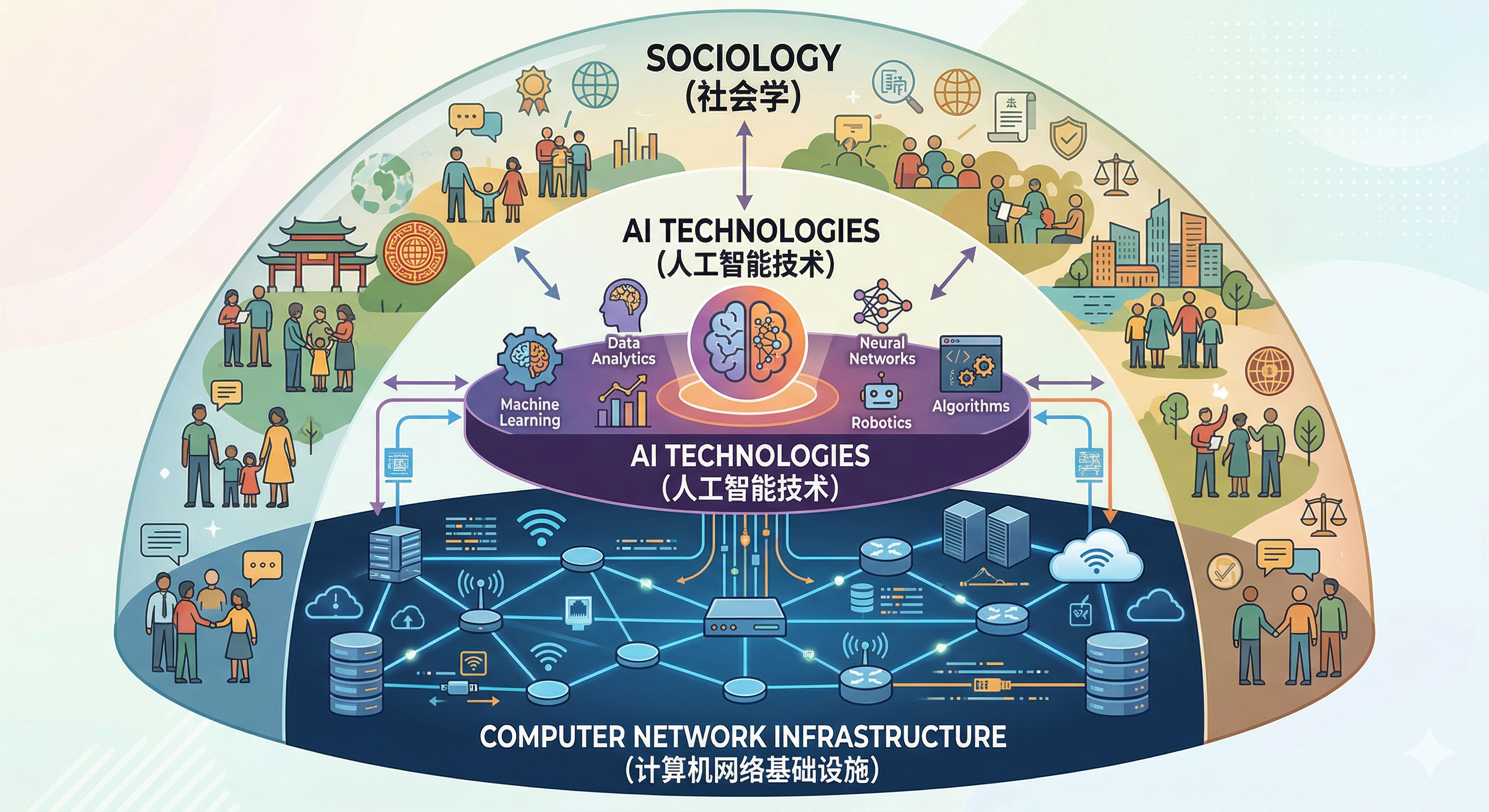
Below, I outline my research in 3 strands: AI4Networks, Networks4AI, Sociodigital Futures of Networks.
AI4Networks
Trustworthy AI for IoT Security
Many anomaly detection techniques have been adopted by Industrial Internet of Things (IIoT) for improving self-diagnosing efficiency and infrastructures security. However, they are usually associated with the issues of computational-hungry and “black box.” Thus, it becomes important to ensure that the detection is not only accurate but also sustainable, and trustworthy by engineers and others.
We propose an Efficient DeepExplainer model based on perturbation-focused sampling, which demonstrates the most computational efficiency among state-of-the-art explainable models. With the important features selected by Efficient DeepExplainer, the rationale of why an anomaly detection decision was made is given, enhancing the trustworthiness of the detection as well as improving the accuracy of anomaly detection.
insert images here…
Adaptive trust models that learn from contextual signals and user feedback to maintain security posture without compromising usability? Rather than replacing human operators, how might AI augment human decision-making in complex security scenarios?
Intelligent Future Open Networks
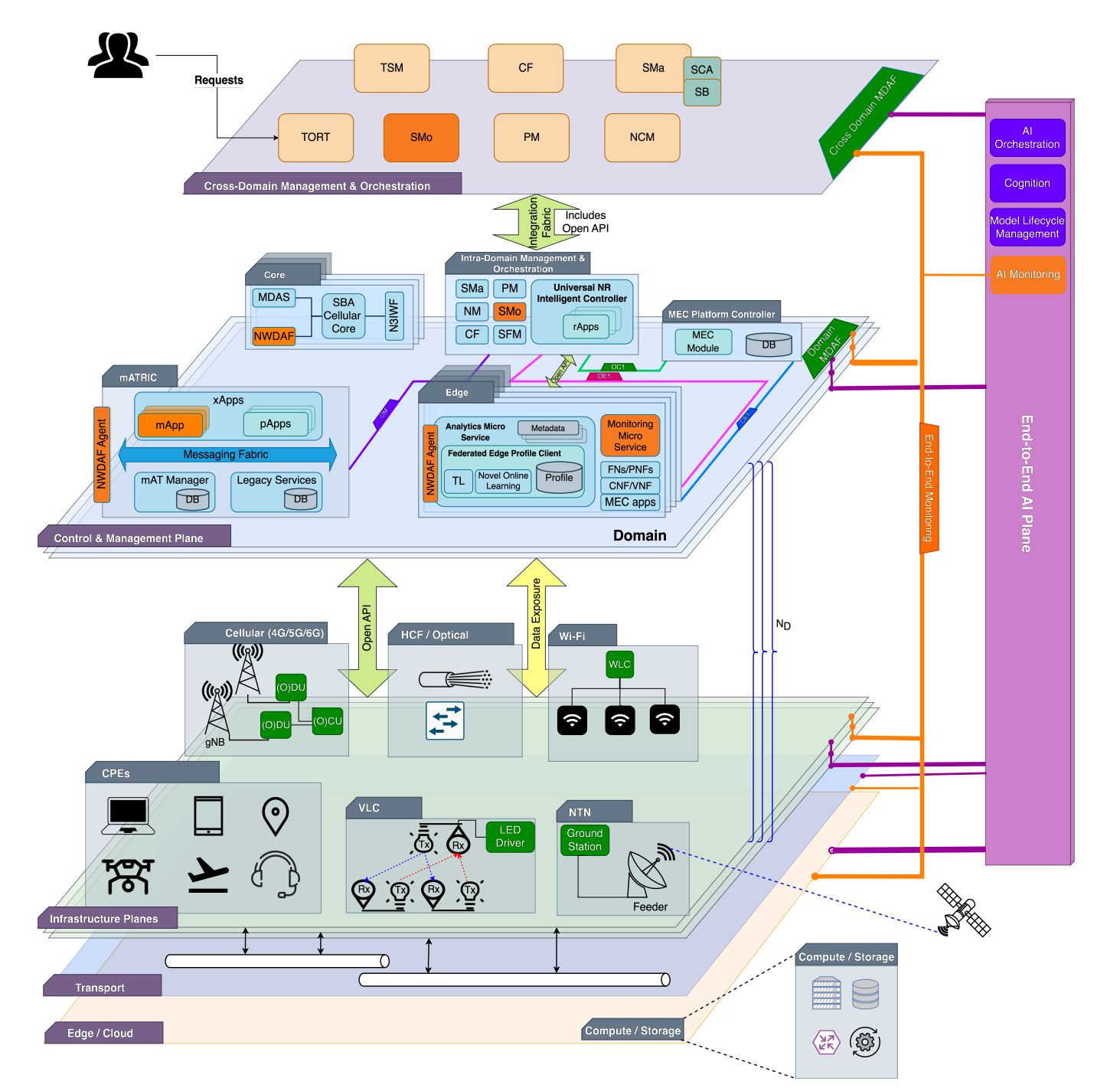
I am fortunate to participate in the REASON project with the Smart Inernet Lab, where we address technical challenges in future network deployments, such as E2E service orchestration, sustainability, security and trust management, and policy management, utilising AI-native principles, considering multiple access technologies and cloud-native solution. As the picture presents below, the REASON architecture is meticulously designed for modularity, interoperability, scalability, simplified troubleshooting, flexibility, and enhanced security, taking into consideration current and future standardisation efforts, and the ease of implementation and training. It is structured into four horizontal layers: Physical Infrastructure, Network Service, Knowledge, and End-User Application, complemented by two vertical layers: Management and Orchestration, and E2E Security. This layered approach ensures a robust, adaptable framework to support the diverse and evolving requirements of 6G networks, fostering innovation and facilitating seamless integration of advanced technologies.
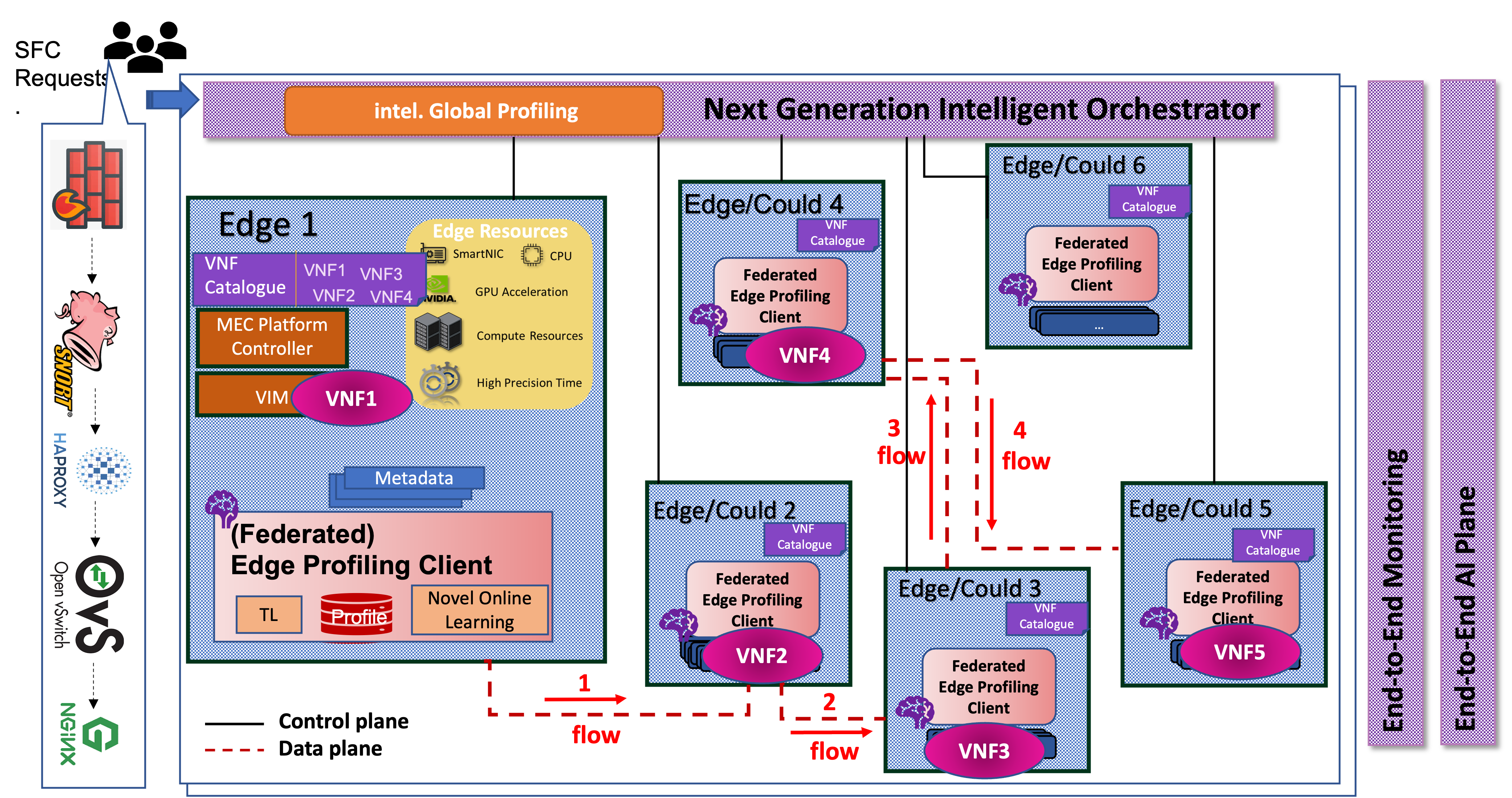
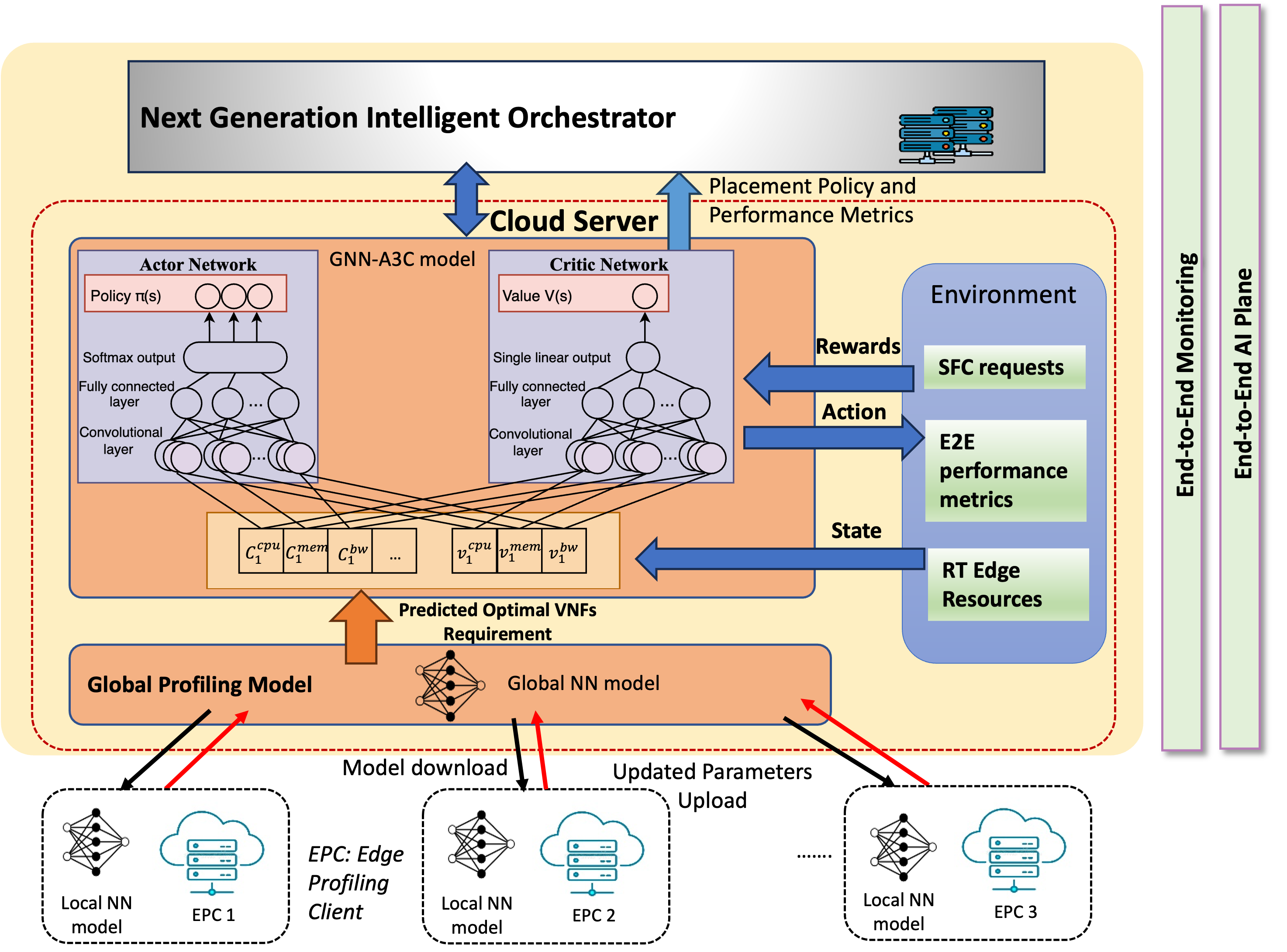
Specifically, I have worked on multi-objective optimization profiling solution to optimize the end-to-end latency, and energy consumption of SFCs across dynamic network environments. The figure below presents the interaction between the next-generation intelligent orchestrator, the Edge Profiling Clients (EPC), and the global profiling, to place a requested SFC.
The picture below is the Next Generation Intelligent Orchestrator, which includes a Deep Q Learning model and a Global Profiling Model. The Global Profiling Model consists of a global neural network model that is trained using aggregated data from the EPCs to improve orchestration decisions. Then the Global Profiling Model predicts the optimal CNFs requirements and passes them to the DQN model. The DQN model includes a primary network and a target network to predict and evaluate SFC orchestration decisions. The replay buffer stores past experiences such as states, actions, and rewards to train the model. Lastly, the value function evaluates the expected reward of actions to improve decision making.
Agentic AI for securing next-generation networks. Generative AI for semantic communication.
Networks4AI
Federated Foudation Models Communication overhead and security
Sociodigital Futures of Networks
Future Networks Sustainability
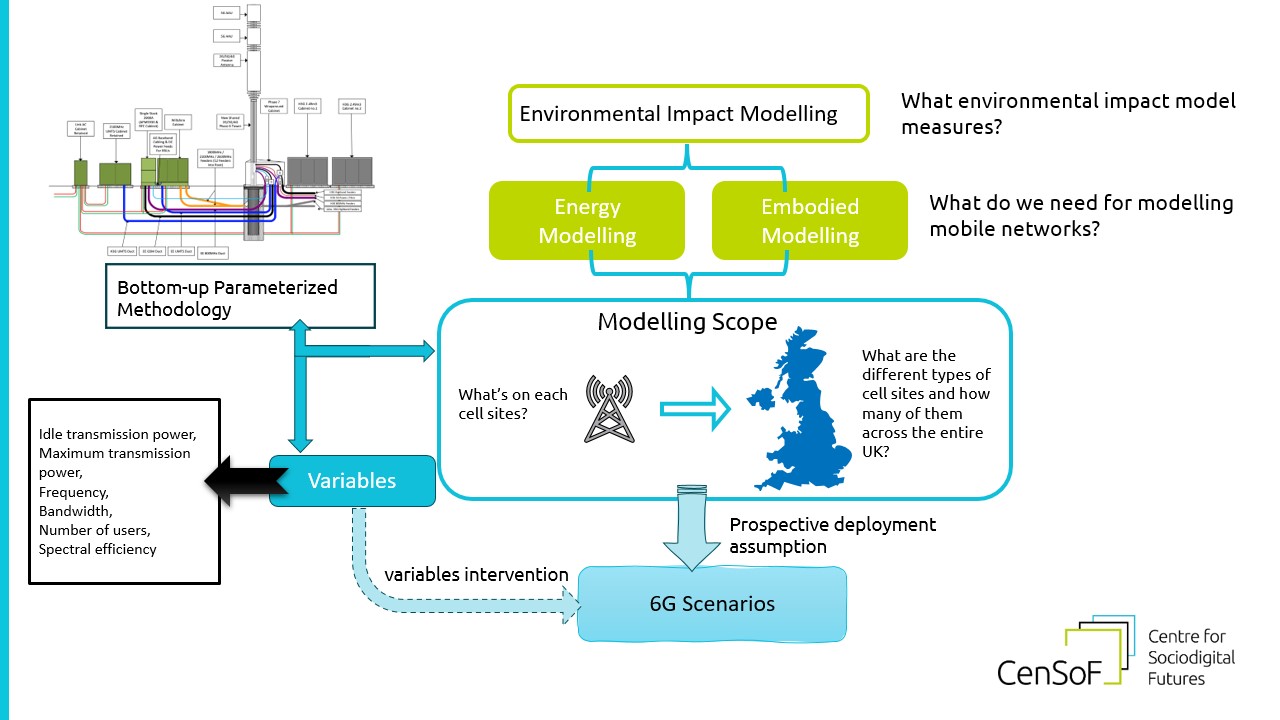
Environmental impact of 6G.
Community-led Futures of Mobile Netowrks
From 2G to 5G and beyond, mobile networks have become pervasive infrastructures, yet their development remains largely opaque and shaped with limited public engagement. Despite their ubiquity, these systems are difficult to grasp and their broader sociotechnical implications are rarely discussed. However, they play a critical role in shaping future societies, particularly as they intertwine with emerging technologies such as generative AI and immersive systems.
Our interdisciplinary group brings together technical, participatory, and creative approaches to explore alternative and more inclusive futures for network infrastructures. We combine futuring methods, speculation, and co-production to reimagine how mobile networks could evolve beyond dominant technocratic visions.
Grounded in a material and temporal understanding of high-performance networks, we use creative and speculative practices to make hidden infrastructures visible and open them up to wider public engagement. By doing so, we aim to empower diverse communities to participate in shaping more ethical, inclusive, and socially responsive technological futures.