Research
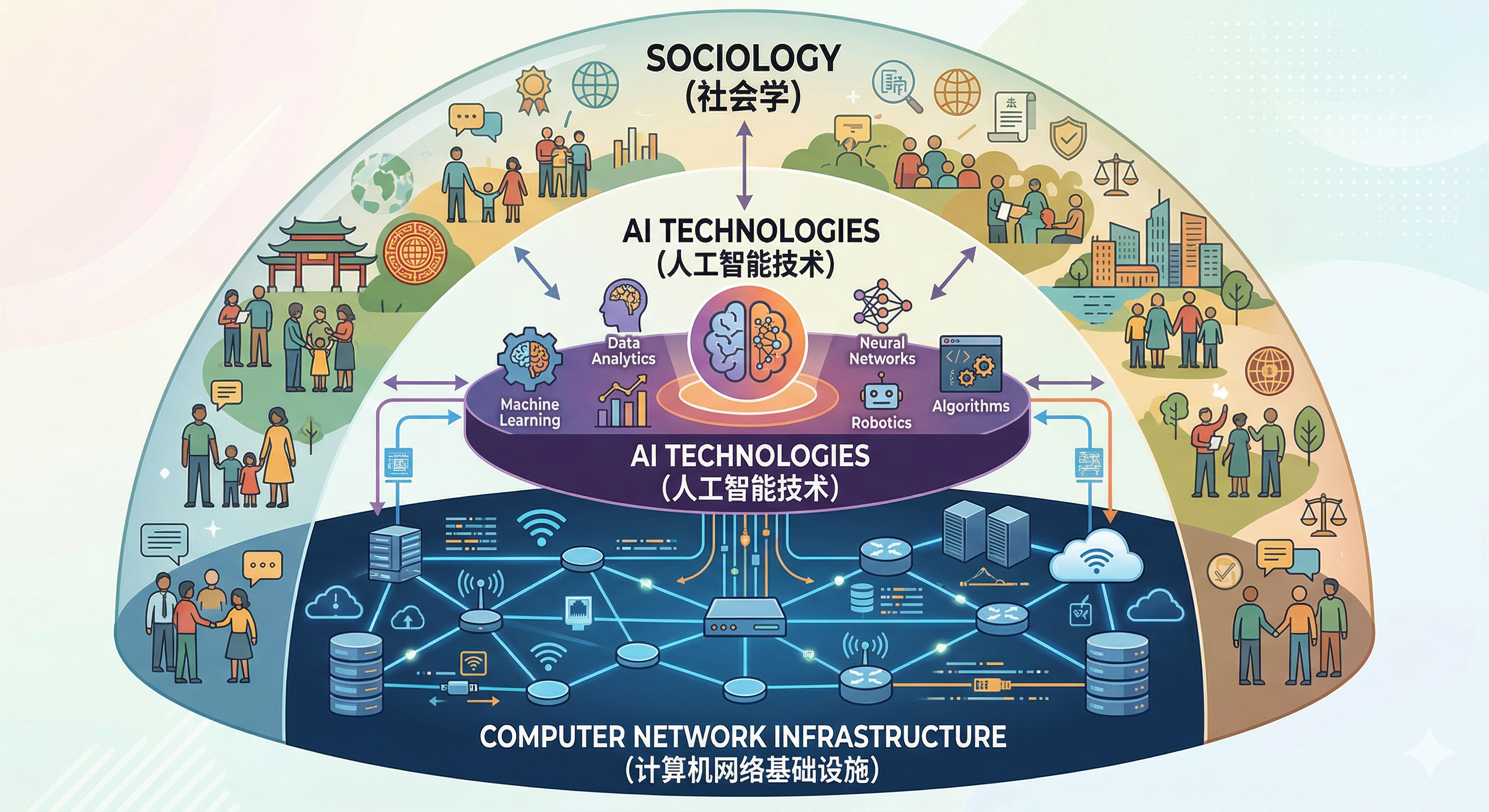
My research sits at the intersection of Aritificial Intelligence, Computer Network, and elements of Sociology. I conceptualise computer networks not merely as technical systems, but as foundational infrastructures upon which AI technologies are built, deployed, and evolved. Within this perspective, AI and networking systems are deeply interdependent: networks enable the scalability and distribution of intelligent services, while AI increasingly shapes how networks are designed, optimised, and managed. Beyond the technical domain, I recognise that sociological considerations are essential to the development and deployment of emerging technologies. The design, governance, and impact of any technologies are inherently influenced by social contexts, human behaviours, and institutional structures.
Below, I outline the different strands of my research in detail, organised according to my academic timeline.
Prologue: Cyber Security and Blockchain
I studied Network Engineering and Cyber Security in my Undergraduate study. I competed in CTF and had won some awards. Lots of CTF tools and codes are still sit in my Github repository (private access only) but old. Since now my career is back to the topic of Cyber Security, I will update my knowledge repository and the Github repo.
My undergrad study finished with a distinction-awarded thesis titled “Design and implementation of academic information credit system based on Hyperledger Fabric technology.” This project focused on leveraging Hyperledger Fabric, a permissioned blockchain framework that supports smart contracts, to design a secure, transparent, and decentralised system for managing academic records and credit information. In this work, I developed a prototype platform that utilises smart contracts to automate the validation, storage, and sharing of academic credentials, ensuring data integrity and reducing reliance on centralised authorities. The system was designed to enhance trust between institutions and stakeholders by providing tamper-resistant records and verifiable transactions.
Trustworthy AI in IoT and Autonomous Decision-making Systems
Intelligent Future Open Networks
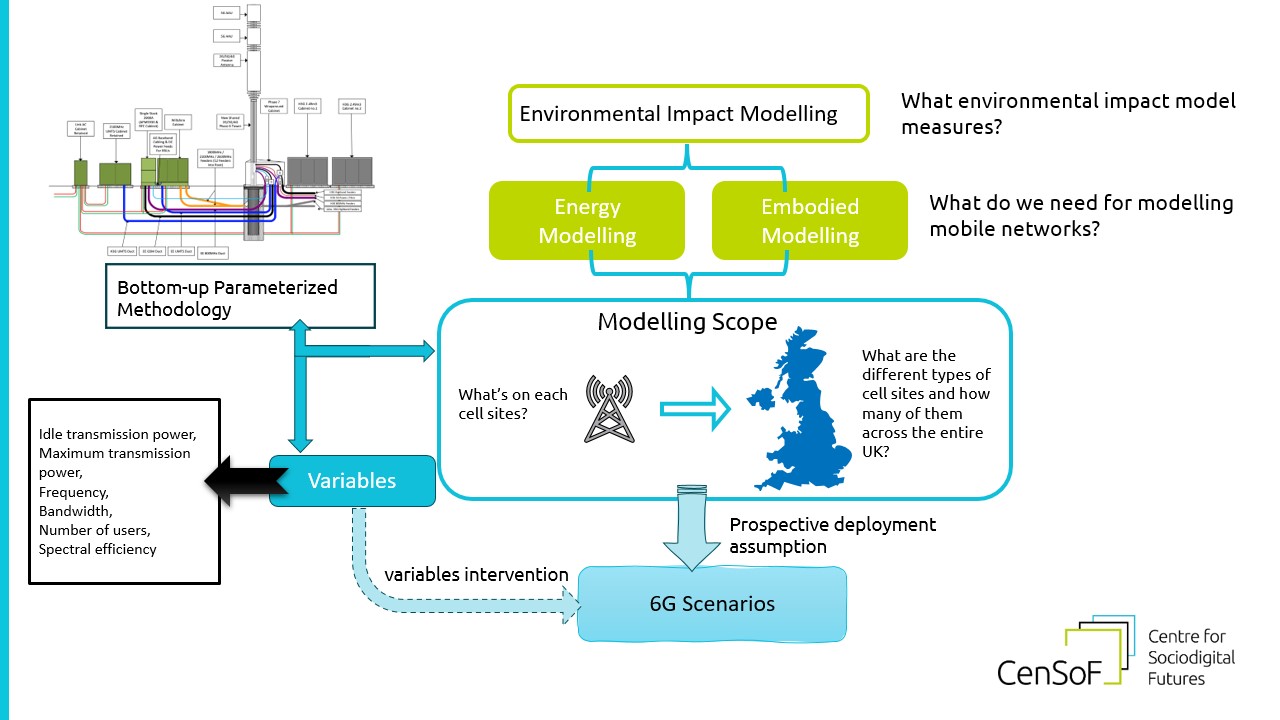
Environmental Impact of Future Networks
Community-led Futures of Mobile Netowrks
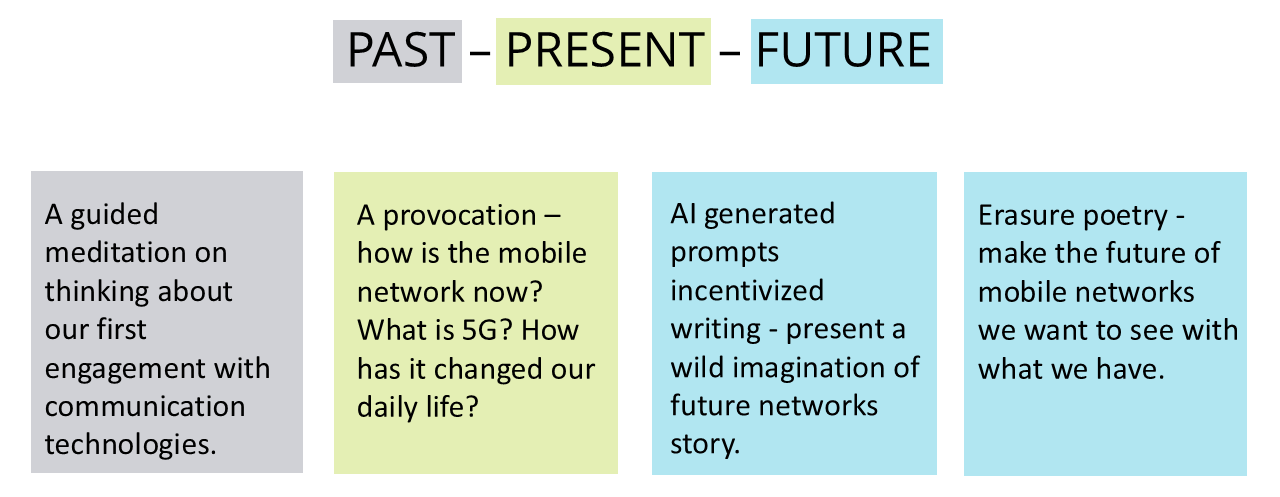
From 2G to 5G and beyond, mobile networks have become pervasive infrastructures, yet their development remains largely opaque and shaped with limited public engagement. Despite their ubiquity, these systems are difficult to grasp and their broader sociotechnical implications are rarely discussed. However, they play a critical role in shaping future societies, particularly as they intertwine with emerging technologies such as generative AI and immersive systems.
Our interdisciplinary group brings together technical, participatory, and creative approaches to explore alternative and more inclusive futures for network infrastructures. We combine futuring methods, speculation, and co-production to reimagine how mobile networks could evolve beyond dominant technocratic visions.
Grounded in a material and temporal understanding of high-performance networks, we use creative and speculative practices to make hidden infrastructures visible and open them up to wider public engagement. By doing so, we aim to empower diverse communities to participate in shaping more ethical, inclusive, and socially responsive technological futures.